The aesthetics industry has never been more accessible. Botox is offered at dental offices, fillers at nail salons, and discounted injectable packages through daily deal websites. For a patient new to cosmetic treatments, that kind of availability can make injectables feel like a routine purchase rather than a medical procedure.
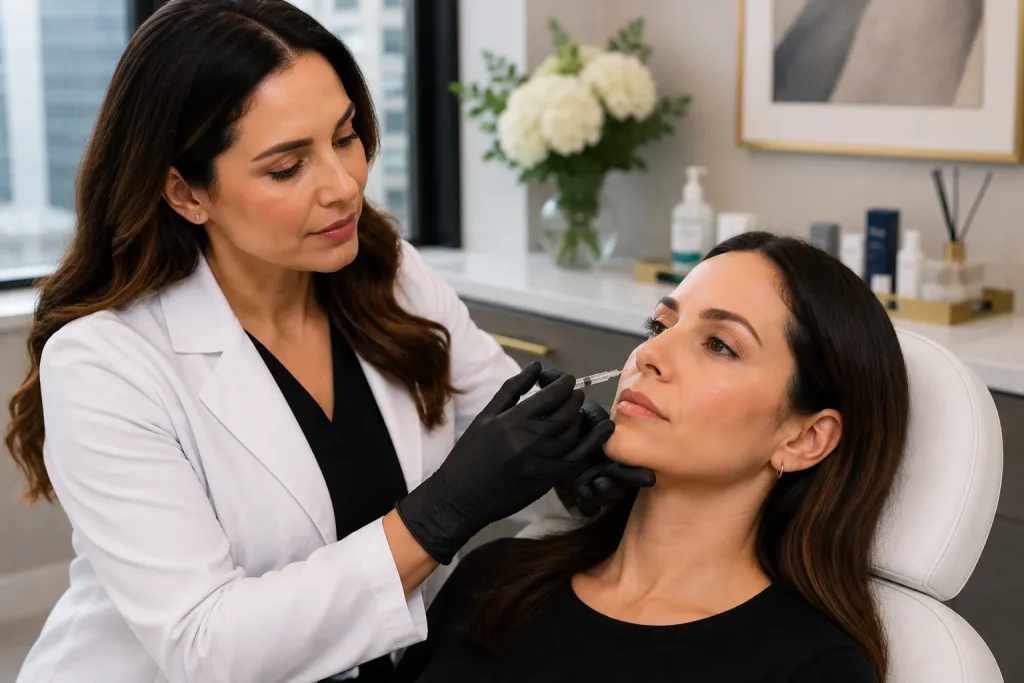
Choosing a safe injectable provider means looking for thorough medical intake, deep anatomical knowledge, verified products from licensed distributors, and a proper clinical environment. High-risk areas like the under eye, nose, temples, and lips require providers who understand facial vascular structures to avoid complications. A safety-first approach also means providers are willing to decline treatments that aren’t appropriate.
Injectables involve needles, vascular structures, and real anatomical risk. The provider you choose, and the protocols they follow, determine not just the quality of your result but the safety of the experience itself. At About Face Aesthetics, safety is not a marketing phrase. It is the foundation on which every treatment we offer is built.
What Safety First Means Before a Single Injection
Safety protocols do not begin in the treatment room. They begin the moment a patient books a consultation. At About Face Aesthetics, every new patient undergoes a thorough intake process covering medical history, current medications, previous cosmetic treatments, allergies, and any underlying conditions that could affect how a treatment is performed.
This matters because injectables interact with the body in ways that vary significantly from person to person. Certain medications increase the risk. Some health conditions affect healing. Previous filler that has not fully dissolved changes what can safely be added on top of it. A provider who skips this step is making decisions without the information they need to make them safely.
The Role of Anatomical Knowledge in Patient Safety
One of the most important safety factors in any injectable treatment is the provider’s depth of anatomical knowledge. High-risk areas like the under eye, nose, temples, and lips sit in close proximity to major vascular structures that, if compromised, can lead to serious complications, including tissue damage or vision changes in the most severe cases.
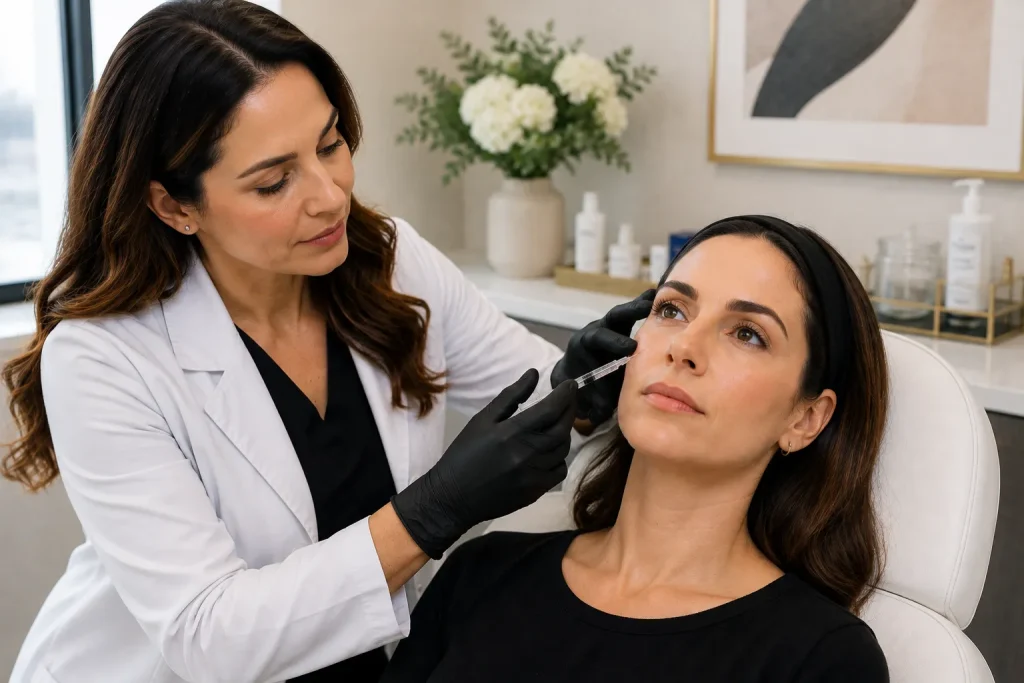
At About Face Aesthetics, our providers are medically trained with a thorough understanding of facial anatomy that goes well beyond a weekend certification course. That training is what allows them to select the correct injection depth, choose the right product for each area, and recognize and respond immediately if anything unexpected occurs. Anatomical expertise is not a bonus in this field. It is a baseline requirement for doing the work safely.
Why the Right Clinical Environment Matters
Where a treatment is performed is as important as who performs it. A proper clinical environment includes sterile technique, appropriate lighting, emergency protocols, and products sourced directly from licensed pharmaceutical distributors. Counterfeit and improperly stored filler is a genuine issue in the aesthetics industry, and patients treated in non-clinical settings often have no way of knowing what was actually injected into their face.
About Face Aesthetics operates out of our Center City Philadelphia practice in the Jefferson Building, a proper medical environment with trained staff, verified products, and the infrastructure to handle any complication that may arise.
Knowing When to Say No Is Part of the Protocol
A safety first approach also means being willing to turn a treatment down when it is not appropriate. Not every patient who requests filler is a good candidate. Not every area a patient wants treated should be treated at that visit. And not every combination of treatments is safe to perform in a single session.
At About Face Aesthetics, our providers are trained to have honest conversations when something is not the right call. That willingness to prioritize patient wellbeing over a booked appointment is one of the clearest expressions of what a safety first practice actually looks like.
Conclusion
Choosing an injectable provider based on price or proximity is one of the most common mistakes patients make. The provider you trust with your face should be able to demonstrate medical training, proper clinical standards, verified products, and a genuine commitment to your safety above everything else. At About Face Aesthetics, those standards have been in place for over 15 years. Schedule a consultation at our Center City Philadelphia practice and experience what a truly safety first approach to injectables feels like.
Frequently Asked Questions
What qualifications should I look for in an injectable provider?
At minimum, your provider should have formal medical training, a thorough understanding of facial anatomy, and experience performing the specific treatment you are seeking. At About Face Aesthetics, all providers are medically trained and work within clinical protocols designed to protect patient safety at every stage of treatment.
How do I know if the filler being used is legitimate?
Legitimate filler comes from licensed pharmaceutical distributors in sealed, manufacturer-verified packaging. Providers offering dramatically discounted filler packages may not be using a verified product. At About Face Aesthetics, every product we use comes from licensed sources, and we are happy to discuss that with any patient who wants the assurance.
What should I tell my provider before an injectable treatment?
Share your full medical history, including current medications, blood thinners or supplements, previous cosmetic treatments, allergies, and any upcoming events that might affect your treatment timeline. At About Face Aesthetics, we cover all of this during our intake and consultation process to ensure every treatment is tailored to your individual situation.
What are the most common risks with injectables?
The most common risks include bruising, swelling, and asymmetry, all of which are manageable with proper technique and aftercare. More serious risks like vascular occlusion are rare but real, and are most likely to occur when a provider lacks the anatomical knowledge to avoid critical structures. Choosing a medically trained provider significantly reduces these risks.
Is it safe to get injectables at a med spa?
Safety depends on the training and protocols of the individual provider, not the category of the practice. A medically trained provider operating within a proper clinical environment and following rigorous safety protocols can deliver injectable treatments as safely as any surgical practice. What matters is the quality of the training, the standards of the environment, and the commitment to putting patient safety first.