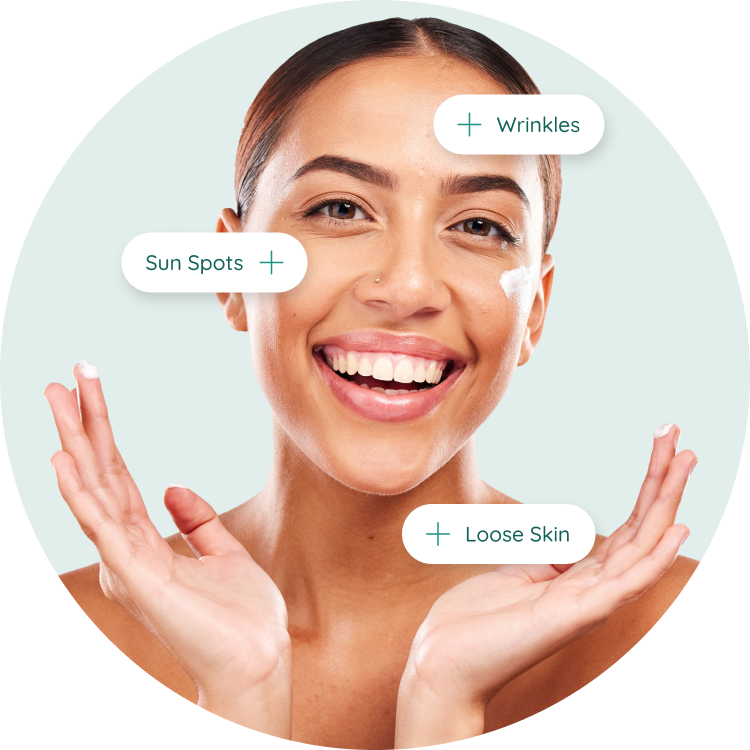

At About Face Aesthetics, we continue to offer the Fraxel laser in Philadelphia when it is the right fit. At the same time, many patients seeking skin resurfacing today achieve more complete, satisfying results with modern CO₂ laser technology.
Understanding how these treatments differ — and why we often recommend CO₂ — allows you to make a more informed, confident choice.
Already familiar with the Fraxel Dual? Skip ahead to learn about your Fraxel laser appointment experience.
How the Fraxel Dual Works
Fraxel Dual is a non-ablative fractional laser that stimulates collagen by delivering controlled heat into the skin through microscopic treatment zones. It uses two wavelengths to address both texture concerns, such as fine lines and acne scarring, and tone concerns, including sun damage and discoloration.
The 1550 wavelength improves skin texture like fine lines and wrinkles, while the 1927 wavelength addresses skin tone, like hyperpigmentation, dark spots, and acne scars. We can also combine them for comprehensive texture and tone rejuvenation.
Because the Fraxel laser in Philadelphia is non-ablative, it typically involves less downtime and a gradual improvement that may require multiple sessions
Benefits of the Fraxel Laser
The Fraxel Dual offers efficient, customizable treatments for the face, neck, and body, yielding tighter, smoother, and more even-toned skin.
- The Fraxel Dual targets hyperpigmentation (dark spots), breaking apart the pigment. The body naturally eliminates this pigment by shedding the dead skin for a clear, even complexion.
- The Fraxel laser in Philadelphia reveals softer, healthier skin by boosting collagen and elastin production, reducing the appearance of surgical scars, stretch marks, and acne scars.
- The laser reduces visible signs of aging, like fine lines and wrinkles, for a more youthful appearance.
Your Fraxel Laser Appointment
On the day of your Fraxel Dual appointment, please arrive at your appointment with your skin free of makeup or skincare products.
Once you arrive, a laser technician from the About Face Aesthetics team makes you comfortable on the treatment bed before cleansing your skin of any dirt or oils. Next, your specialist applies a topical numbing cream or directs you to inhale ProNox, should you choose one of About Face’s anesthetic (numbing) options for comfort.
When you feel ready, they apply a glide gel to help the device head move smoothly over your skin.
The Fraxel Dual treatment lasts 15 to 45 minutes until the entire treatment area is addressed.
After treatment, your laser technician cleans off the glide gel and applies moisturizers or serums to calm and protect the skin during the healing process.
The Rest of the Day After Treatment
- Your face might feel warm after treatment. Soothe your skin by placing ice packs (or bags of frozen veggies) on the treated area for 20-minute increments.
- Keep your head elevated on a pillow or two when lying down to prevent unnecessary swelling.
- You may notice a grid-like texture on your skin. This is completely normal; each of those microscopic dots represents an area of skin that was treated. (The criss-cross pattern marks the actual path of the laser beam as it moves over your skin.)
- Drink plenty of fluids to stay hydrated. (Avoid caffeine and alcohol the rest of the day.)
- If your skin feels tight or itchy, apply a non-comedogenic moisturizer. (We recommend leaving your moisturizer and sunscreen in the refrigerator; it makes applications feel especially soothing.)
- Protect your skin from the sun after your appointment for the Fraxel laser in Philadelphia by wearing SPF 30 sunscreen, reapplying every 2 hours.
After Treatment: Days 2 to 7
- Wash your face with warm water. (Hot water will not damage your skin, but warm water feels much better.)
- Be gentle with your skin. Avoid harsh or exfoliating skin care products (including retinoids).
- Apply SPF 30 sunscreen after washing your face in the morning, and reapply every 2 hours. (Even if you are not going to be outdoors, you can still be exposed to incremental sunlight from windows, or being in the car, etc.) Protect the skin you are trying to perfect.
- Your skin may feel tight, dry, or itchy. Continue applying noncomedogenic moisturizer as often as needed.
- Although cold compresses will no longer benefit your healing process after the first day, the coolness against your skin will still feel good. Apply cold compresses to your skin for as long as you like.
- If you are experiencing uncomfortable swelling, any over-the-counter anti-inflammatory (such as Aleve or Motrin) can be beneficial in reducing puffiness. The most common areas of swelling are under the eyes and around the mouth.
- You may notice tiny white bumps all over the skin. These are pockets of solidified oil that will shed within a day or two if left alone. (Do not pick these, as your skin is very sensitive right now.)
- You may experience peeling. If this occurs, do not pick or peel the flaky skin. The skin will shed off naturally as the healing progresses, and forced peeling can cause hyperpigmentation (dark spots) or hypopigmentation (light spots).
- Gentle shaving or tweezing is fine, but avoid waxing or applying hair removal cream on treated areas.
After Treatment: 2 Weeks
- You should be able to resume your original skincare regimen. However, if your regular products irritate your skin, abstain from using them for 1 to 2 more days.
Please remember the recovery process looks different for everyone; be patient with your skin as it heals.
Fraxel vs. CO₂ Laser Resurfacing
For patients looking for more visible correction, fewer total treatments, and longer-lasting results, CO₂ laser resurfacing often offers a more comprehensive solution. CO₂ technology treats both the surface of the skin and deeper structural layers, allowing for greater improvement in wrinkles, texture, laxity, and overall skin quality.
In our experience, patients who initially inquire about the Fraxel laser in Philadelphia are often better served by CO₂ once they understand the difference in outcomes, recovery, and longevity.
Thoughtfully Delivered Skin Resurfacing
If you’re considering skin resurfacing, an in-person consultation is the best place to begin. It allows time to assess your skin, discuss your goals, and determine whether Fraxel, CO₂ laser resurfacing, or another approach altogether is the most appropriate option for you.
Appointments at About Face Aesthetics are available by consultation.