At About Face Aesthetics, restraint is not a limitation on what we offer. It is the most important clinical skill we practice. For more than fifteen years in Philadelphia, we have seen what happens when providers consistently do too much, and we have built this practice around making sure that never happens here.
Restraint in medical aesthetics means identifying the minimum treatment needed to achieve a patient’s goal rather than continuing simply because more product is available. Overcorrection from years of aggressive Botox or filler placement causes puffiness, limited facial movement, and unnatural results. Correction services like lip filler dissolving can address previous overtreatment when a clean baseline is needed.
What Restraint Actually Means in Medical Aesthetics and Why It Produces Better Results
Restraint is not a philosophy that says less is always better. It is the clinical discipline of identifying exactly what a given face needs at a given point in time and stopping there, even when a patient might want more. Most patients who have been overtreated did not walk in asking for too much. They walked in trusting a provider who did not know when to stop. That is the problem that restraint directly solves.
Why Overcorrection Does So Much Damage Over Time
The faces that make people skeptical about aesthetic treatments are almost always the result of accumulated decisions, not a single bad session. Botox in Philadelphia, applied too aggressively over the years, flattens the forehead and removes the natural movement that makes a face look alive. Filler placed without respect for facial anatomy migrates slowly, creates puffiness, and changes the shape of a face in ways that become increasingly difficult to address.
None of this is the fault of the products. Both neuromodulators and dermal fillers in Philadelphia produce genuinely good outcomes when used correctly and conservatively. The problem is almost always provider judgment and the willingness to say no clearly when the answer should be no.
How We Apply Restraint at Every Stage of Treatment
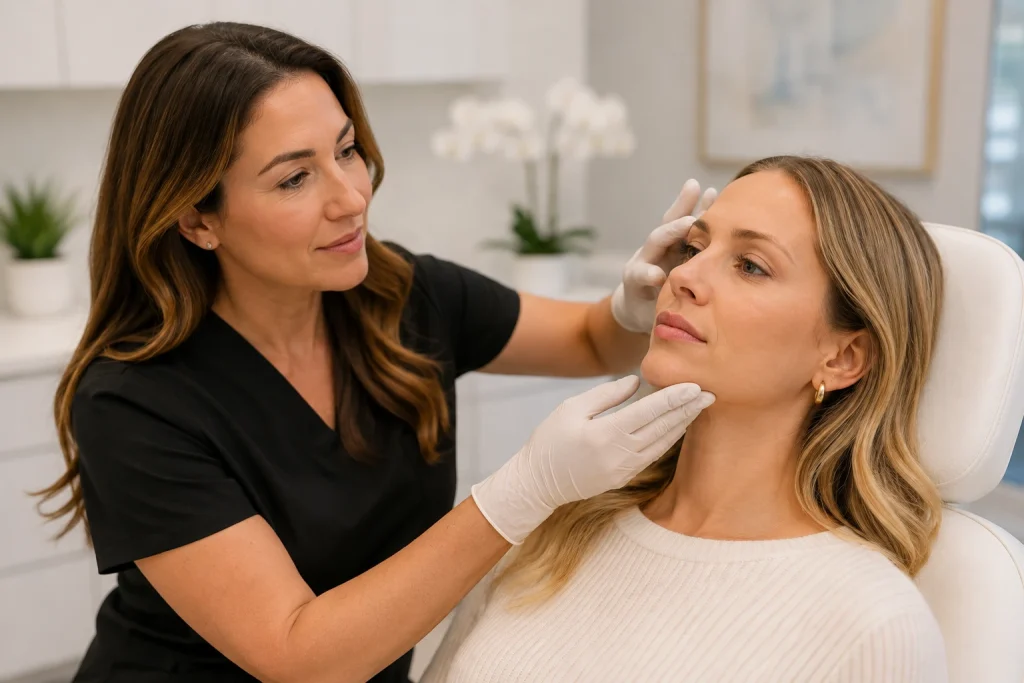
Every treatment plan at About Face Aesthetics starts with a single question: What is the minimum intervention that gets this patient the result they actually want? We do not build plans around what we can offer or what a patient has read about online. We build them carefully around the face in front of us and what it genuinely needs at this particular time.
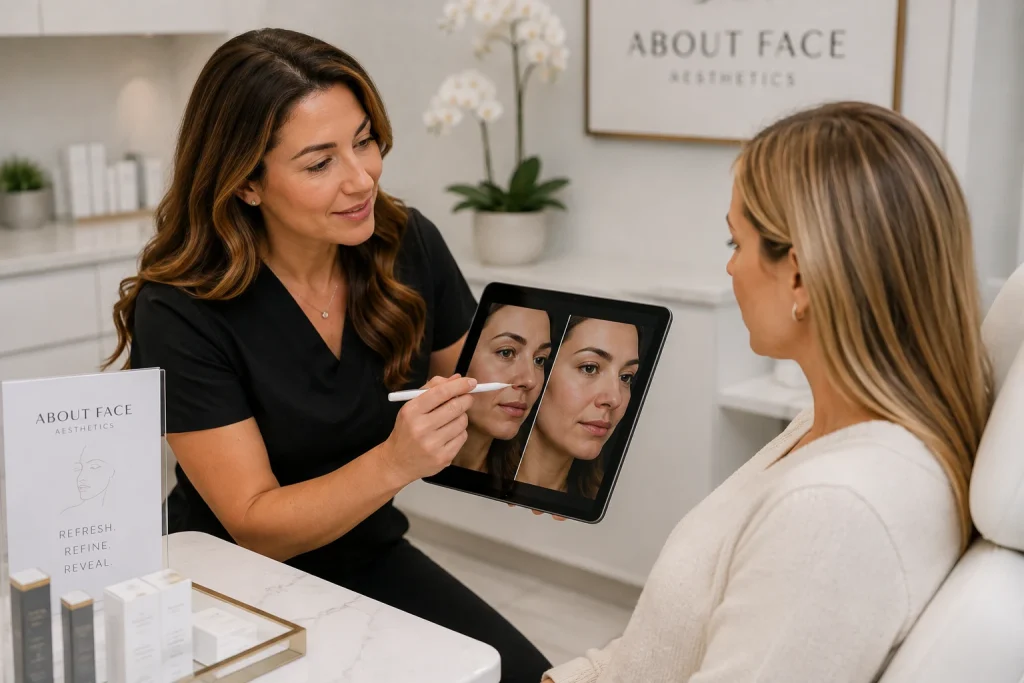
This approach shapes everything we do. We advise patients to wait rather than retreat when their previous results still have life in them. We recommend less Sculptra in Philadelphia and fewer filler sessions than some patients expect. We factor in how dermal fillers, biostimulators, and neuromodulators interact with tissue across years, not just individual appointments. A provider who genuinely thinks in timelines builds plans that hold up well and age naturally.
Why Correction Is Part of a Restrained Practice
At About Face Aesthetics, restraint also means having the honesty to correct what should not have been done. We offer lip filler dissolving in Philadelphia and other correction services for patients who come to us carrying previous work that no longer looks right. Migration, overcorrection, and asymmetry from poor placement are real and entirely addressable. Starting from a clean baseline is sometimes the most important step in a long term treatment plan.
We assess every situation honestly before recommending more products. When dissolving is the right answer, we say so and build from there. That kind of direct clinical honesty is only possible when the provider is not financially motivated to simply add more product to compensate.
How Skin Health Fits Into the Picture
Restraint in injectables does not mean doing less for your skin overall. It means directing your investment toward treatments that actually address the underlying condition. Our microneedling in Philadelphia, chemical peels in Philadelphia, and exosome therapy in Philadelphia work at the cellular level to improve skin quality rather than simply masking what aging is doing. When the skin is genuinely in good health, injectables can achieve more with less product.
This is how we build long term plans at About Face Aesthetics. Founder Naomi Fenlin, LME, CME, designed this practice around the clear idea that treating the skin well and consistently over the years produces outcomes no single injectable session can match on its own.
Conclusion
Restraint in medical aesthetics is not a conservative style choice. It is a clinical discipline that protects patients and produces results that actually hold up over time. At About Face Aesthetics, it shapes every consultation, every treatment plan, and every honest conversation we have with a patient about what their face genuinely needs right now. To book a consultation, contact us at (215) 923-5001 or visit 1015 Chestnut St, Suite 520, Center City Philadelphia.
FAQs
What does restraint actually mean in injectable practice?
It means a provider identifies the minimum treatment needed to achieve the patient’s genuine goal and stops there, rather than continuing because the patient asked or because more product is available.
Does less filler always mean worse results?
No. Appropriately placed filler that respects the natural proportions of the face produces results that look better and last longer than overcorrected work. The quality of placement matters far more than the volume.
What are the signs that someone has been overtreated?
Common signs include a face that looks consistently puffy, lips out of proportion with other features, limited facial movement, or a general appearance that reads as worked on rather than refreshed and natural.
Can overtreatment be reversed?
Often, yes. We offer lip filler dissolving and other correction services for patients whose previous work has not held up or was not placed correctly. A consultation is always the right first step.